
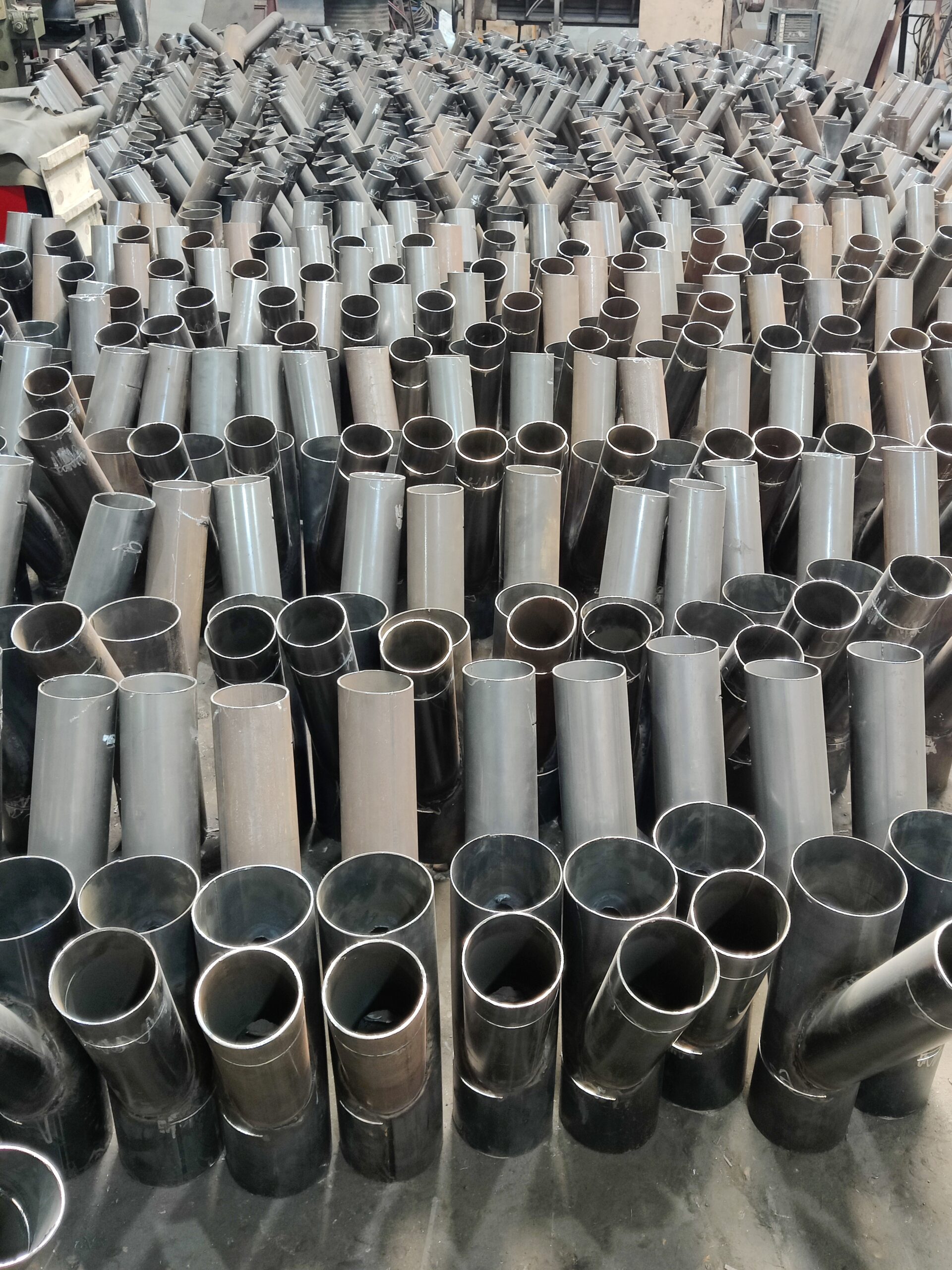
Pipe forming in all sizes and dimensions
Pipe Forming Methods
The forming process is carried out using several techniques depending on the pipe’s purpose and the type of metal:
1. Rolling and Welding Pipes
This is the most common method used in workshops and medium-sized factories:
Description: A flat metal strip is passed through a series of rollers that gradually bend the strip’s edges until they meet.
Welding: Once the shape is cylindrical, the weld seam (longitudinal line) is joined using electric arc welding or high-frequency welding (ERW).
Result: Longitudinal pipes with a fixed diameter.
2. Cold Drawing
Description: A pre-formed pipe is drawn through a die with a smaller diameter, using a mandrel inside to define the internal diameter.
Advantage: Provides very high dimensional accuracy and an exceptionally smooth surface. It is used for pipes requiring high strength.
3. Seamless Pipes
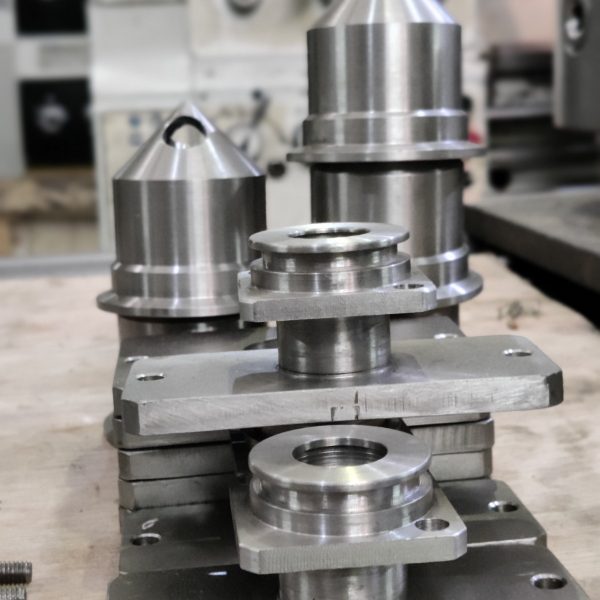
Description: A solid cylindrical metal billet is heated to a red-hot temperature, then its center is pierced with a pointed tip while being rapidly rolled.
Advantage: It has no weak points (weld lines), thus withstanding enormous pressures.
Pipe Applications Based on Forming Type
Applications vary depending on the pipe’s ability to withstand pressure and environmental conditions.
Reviews
Clear filtersThere are no reviews yet.